

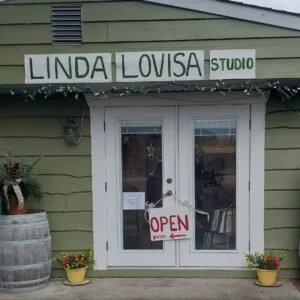
BIG NEWS!
Linda and many of her original artworks, books, and some of the crafts that she has produced, can be seen for a limited time at a pop-up studio/gallery at the cottage at 1680 Jennens Rd in West Kelowna.
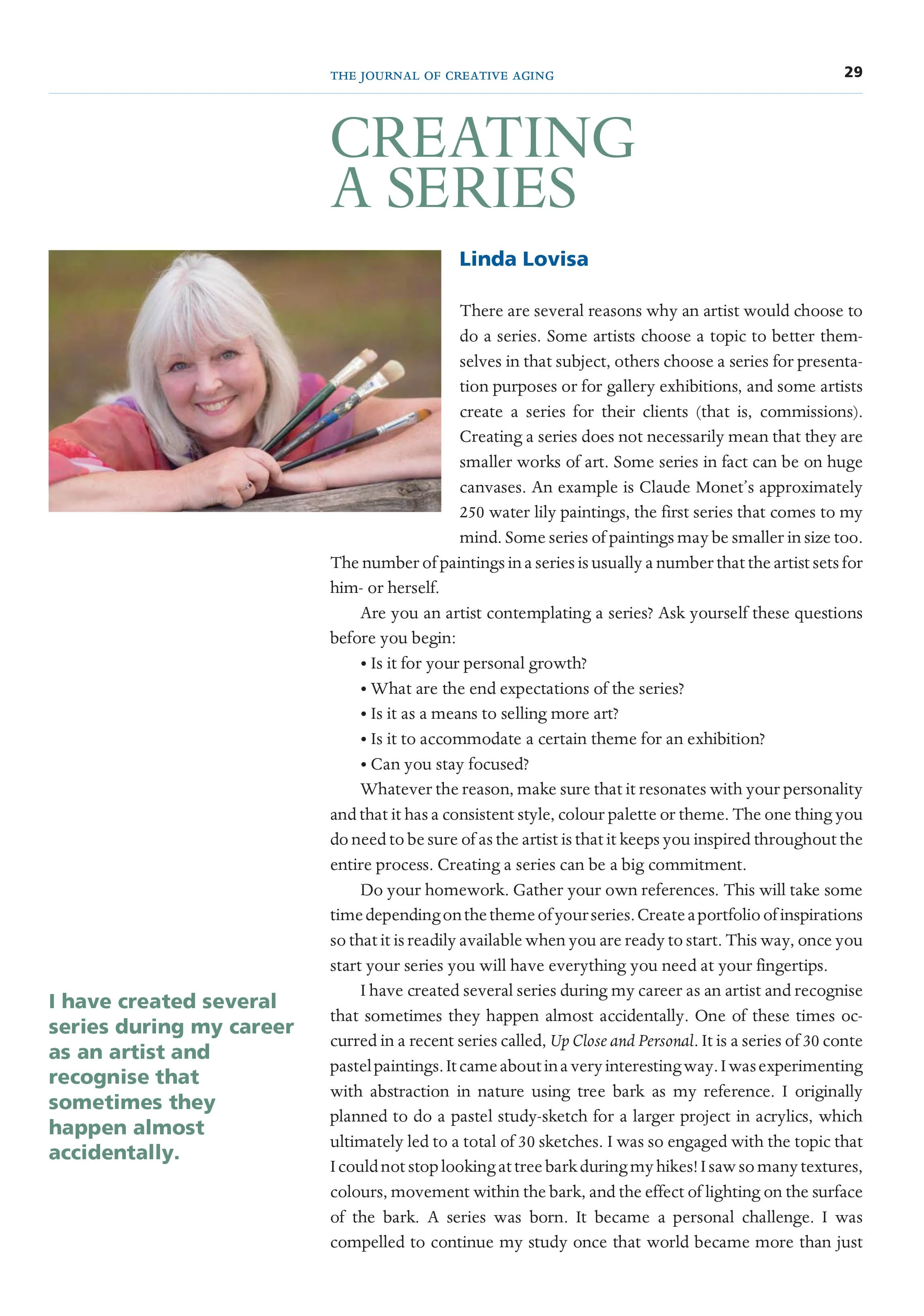
Creating a Series
This article appears in the Fall, 2023 issue of SAGE-ING magazine.
There are several reasons why an artist would choose to do a series. Some artists choose a topic to better themselves in that subject, others choose a series for presentation purposes or for gallery exhibitions, and some artists create a series for their clients (that is, commissions). Creating a series does not necessarily mean that they are smaller works of art. Some series in fact can be on huge canvases. An example is Claude Monet’s approximately 250 water lily paintings, the first series that comes to my mind. Some series of paintings may be smaller in size too The number of paintings in a series is usually a number that the artist sets for him- or herself. Are you an artist contemplating a series? Ask yourself these questions before you begin…
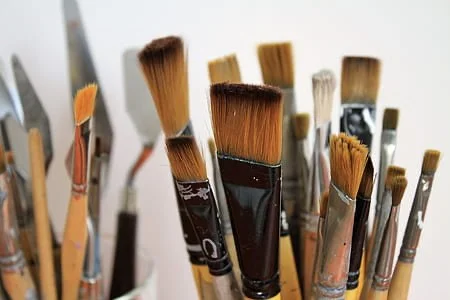
Five Art Class Tool Essentials
Have you been thinking of taking an art class? You’re no doubt wondering: ‘Where do I start?’. Do I have to know how to draw before I try to paint? I can’t even draw a stick person! I can’t draw a straight line! These are questions and quotes I have heard often. The answer to these questions is, no, you do not need to know how to draw before you try to paint. I don’t draw stick men very often either, so I think you will do just fine. Straight lines can be drawn with a ruler. There is no reason why you should put up these roadblocks if you really want to learn an art form. Wanting to learn is the very first step as it opens your mind to the adventure you are about to begin.
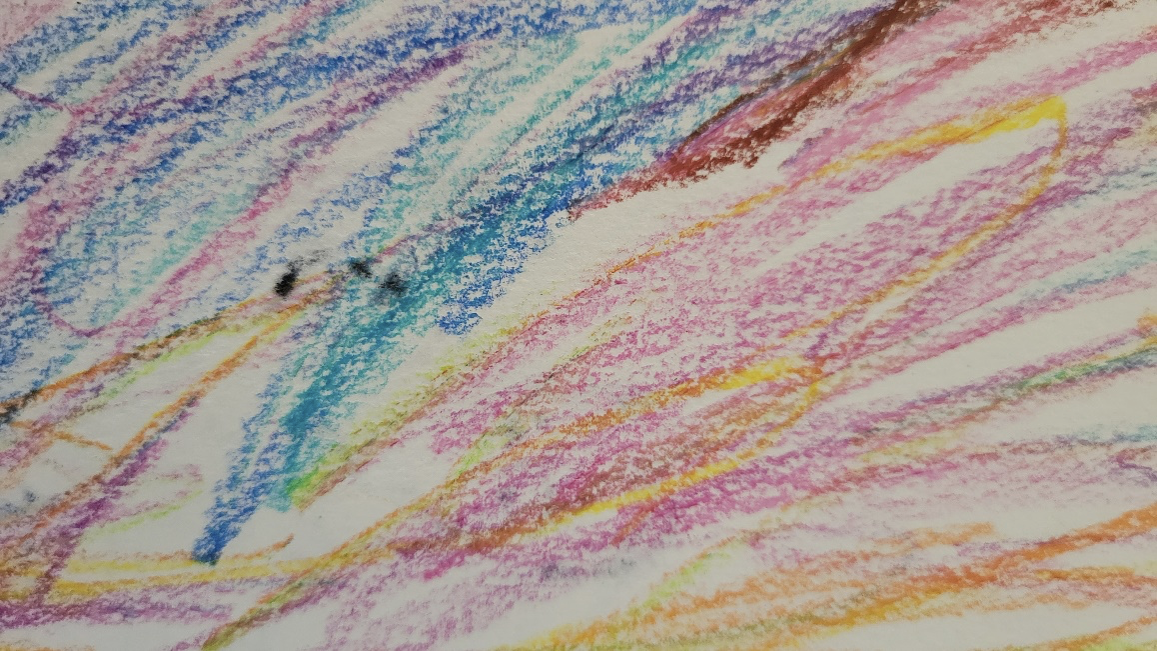
The Art of Scribbling, by Linda Lovisa
As children, the first thing we do when we are given a pencil is scribble. It helps develop hand-eye coordination. It is a way of communicating through lines. Most scribbles at a young age are up and down lines, some joining, others are disconnected. As the child gets used to how to hold the pencil, they begin to explore more shapes such as circles. Lifting the pencil and repeating the shape in another location on the page and gaining control of movement.
How Do You Become An Art Teacher?
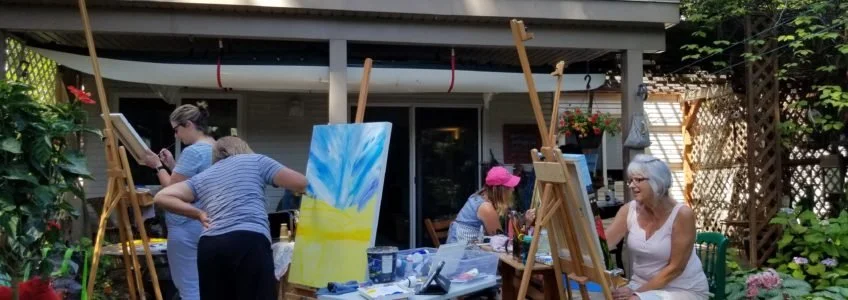
This is a very good question. Becoming an art teacher is something very special. You are imparting your knowledge to students of all ages. Whether you are teaching an on-going class or a weekend workshop, you are an influence on that person’s growth as an artist.
How you get there is always an interesting story. It is different for everyone. Some choose university to pursue a fine arts degree and others just get chosen because of the things they do. Volunteering at schools, summer camps, museum art programs, Girl Guides and Scouts’ groups; the list goes on. The latter is how I got started.
A Creative Life Reinvents Itself
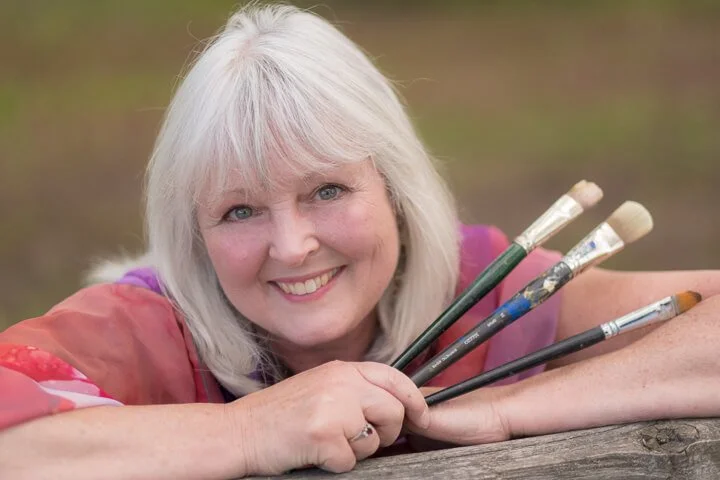
I had a dream. Sometimes you just have to follow your dreams, even against all odds. That is exactly what I did. I opened New Moon Gallery in November of 2009. I was advised it might not be a good time to open a new business; the economy was spiralling downwards at the time. My heart was telling me differently.
I had very big plans for New Moon Gallery. It was exciting! It would be a place to teach and to create works of art. It would also be somewhere to showcase and celebrate art, a creative space for artists to show and share their work with a community that had no art centre. I did just that! It was unique and special.
Art For Change
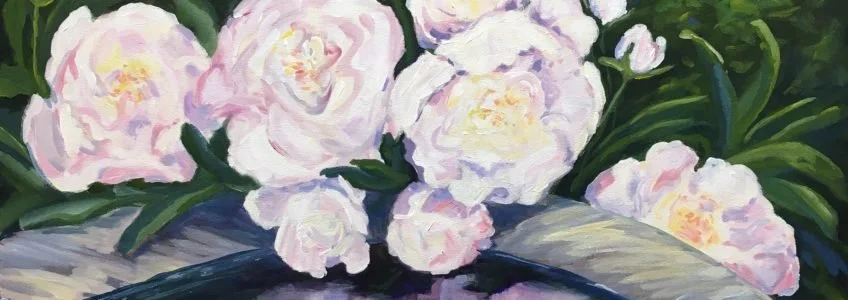
We are all naturally born to create. But somehow we define art, and creation as something only for those who are naturals or are born with talent. Being naturally born to create, it’s what you do with that energy as you grow: you can grow into it, or grow away from it. I see with many of my students that if you grow away from it, someday it will call you back.